
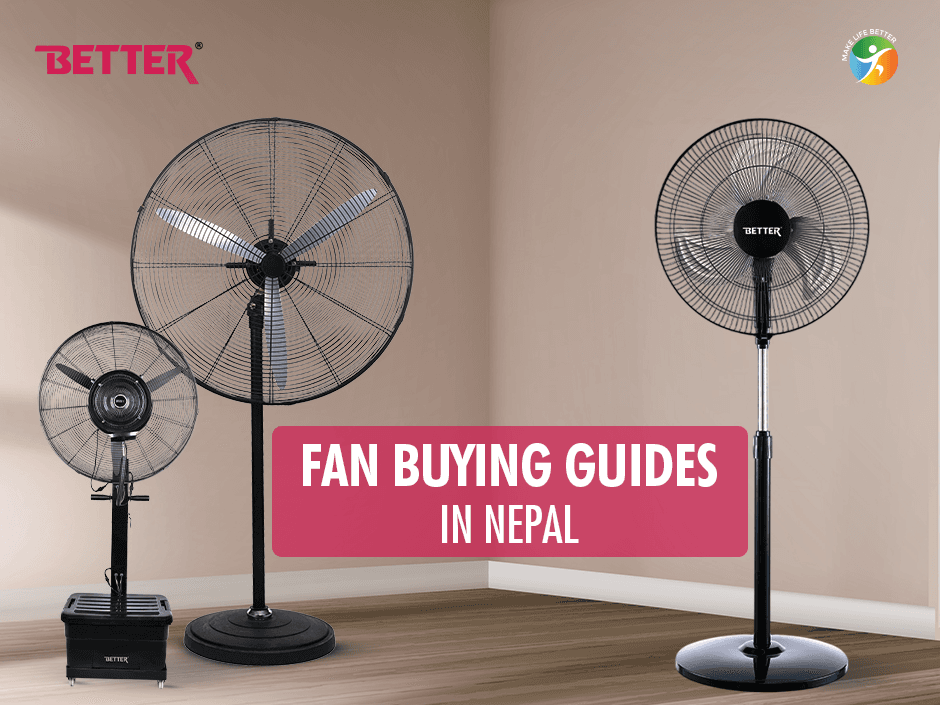
Choosing the right fan for a home in Nepal isn’t as simple as picking whatever looks decent in a showroom. Climate, electricity reliability, room size, and even ceiling height all play a role. If you get this wrong, you either end up sweating in April or freezing in December with a fan that does nothing but spin uselessly.
Here’s how to actually choose a fan that makes sense for Nepalese homes.
Understand Your Room Size First
This is where most people mess up. They buy a fan based on price or looks and completely ignore whether it can actually move enough air.
Small rooms (up to 100 sq. ft.): 36–42 inch fans work fine
Medium rooms (100–200 sq. ft.): 48 inch fans are ideal
Large rooms (200+ sq. ft.): 52–56 inch fans or multiple fans
If your fan is too small, it’ll feel like a decoration. Too big, and you’re just wasting electricity.
Ceiling Height Matters More Than You Think
Nepali homes vary a lot. Some have low ceilings, others go unnecessarily high like you’re trying to impress birds.
Low ceilings: Go for low-profile or flush-mounted fans
Standard ceilings (8–10 ft): Regular downrod fans
High ceilings: Use longer downrods so airflow actually reaches you
A fan too high up is basically just stirring air for ghosts.
Air Delivery (CFM) Is the Real Metric
Ignore marketing fluff. Focus on CFM (Cubic Feet per Minute). That tells you how much air the fan actually moves.
Higher CFM = better airflow
For Nepal’s summer (especially Terai regions), aim for high CFM fans
If you don’t check this, you’re buying blind.
Energy Efficiency: Don’t Burn Money Monthly
Electricity costs in Nepal aren’t outrageous, but they add up. Especially if you’re running fans all day during summer.
Look for BLDC (Brushless Direct Current) fans
These use up to 60–70% less electricity than traditional fans
They also work better with inverters and backup systems
If you live somewhere with frequent power cuts, this isn’t optional. It’s survival.
Inverter Compatibility (Critical for Nepal)
Let’s not pretend load-shedding or power cuts are gone forever.
A normal fan:
Slows down on inverter
Wastes battery
A BLDC fan:
Maintains speed
Consumes very little power
If your area has unstable electricity, choosing a non-inverter-friendly fan is just you volunteering to suffer.
Noise Levels: Don’t Ignore This
Some fans sound like they’re about to take off.
Check for low-noise or silent operation models
Especially important for bedrooms and workspaces
You don’t want your peaceful sleep turning into a helicopter simulation.
Blade Material and Build Quality
Fans in Nepal deal with dust. A lot of it.
Metal blades: Durable but slightly noisy
ABS/plastic blades: Lightweight, quieter, modern look
Wooden finish blades: Mostly aesthetic, decent performance
Also check:
Rust resistance (important in humid areas)
Strong motor housing
Cheap fans start wobbling in a few months. Then you pretend it’s fine until it sounds like it’ll fall on your head.
Climate-Based Selection
Nepal isn’t one climate. It’s like three countries stacked vertically.
Terai (hot & humid):
High-speed, high-CFM fans
Anti-rust materials
Hilly regions (moderate):
Standard fans with balanced airflow
Mountain areas (cold):
Fans are less critical, but reversible fans (for winter air circulation) can help
Buying the same fan for Biratnagar and Mustang is lazy thinking.
Smart Features: Useful or Just Fancy?
Modern fans come with:
Remote control
Smart app connectivity
Timer settings
Sleep mode
Are they necessary? No.
Are they convenient? Yes.
If you’re already investing in a good fan, a remote-controlled BLDC model is actually worth it.
Design and Aesthetics
You care about how your room looks. Don’t lie.
Fans now come in:
Minimal modern designs
Matte finishes
Decorative lighting options
Just don’t sacrifice performance for looks. A beautiful fan that doesn’t cool is just expensive sarcasm.
Budget vs Long-Term Value
Cheap fans:
Lower upfront cost
Higher electricity bills
Shorter lifespan
Quality fans (especially BLDC):
Higher upfront cost
Lower long-term expenses
Better durability
If you’re thinking long-term, the “expensive” fan is usually cheaper.
Final Reality Check
If your fan:
Matches your room size
Has high CFM
Is energy-efficient (preferably BLDC)
Works well with inverter
Fits your ceiling height
Then congratulations, you’ve avoided the most common mistakes people make.
If not, enjoy sweating while your fan spins like it’s doing something meaningful.